
The Importance Of The Transport Data Action Plan

The plan, launched by the DfT on the 25th March 2026, defines the Government's vision for mobility data in the near future.
The report is important because it consolidates many data strategy threads that have been evolving over the last few years, identifies hurdles innovators have faced when developing new software solutions, and aims to overcome them. And tries to take the tiller to guide the marketplace toward a future that benefits all corners of UK society, the economy and operators.
The DfT believes this plan is essential for transforming the UK transport network into a more efficient, user-centric, and innovative system by unlocking the value of transport data. As such the plan works in tandem with 'Better Connected' the DfT's plan for a better interconnected transport strategy. The aim of this plan is for public transport to be safe, reliable, affordable and accessible for everyone, enabling them to advance in life and make the journeys they need to easily. Using a design-thinking approach the strategy puts customers at the heart of the experience, whilst also focusing on better connecting places and working in partnership with multiple stakeholders. Obviously, achieving these aims means putting data front and center.
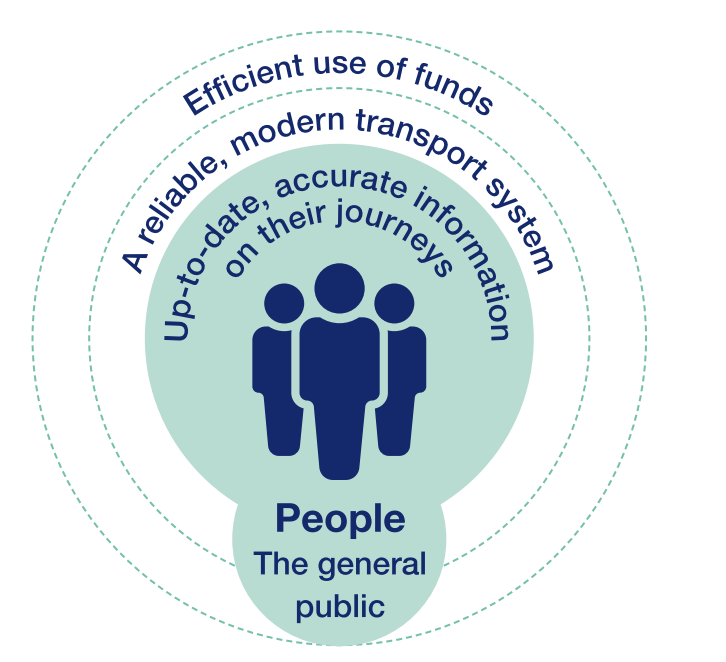
The Transport Data Action Plan is circa 57 pages long, covering multiple action points and providing a timeline (now, near, future) for their achievement. We don't aim to provide a perspective on the whole report, however from a PassageWay perspective, one of the most interesting technical elements is the adoption of APIs for data sharing. Exposing data in a single, agreed-upon format via APIs means far fewer points of failure, faster development cycles and easier discoverability. The DfT states that it expects to generate APIs for all existing or new datasets and will encourage other organisations to do the same. This unified approach, long advocated by a minority of sector suppliers has the potential to be a game-changer for the marketplace, encouraging the development of new applications and customer experience toolsets where previously they would not have been economically viable.
The action plan addresses some of the commercial aspects of public transport data, recognising that development, maintenance and hosting incur significant costs. Whilst we would like to see universal free access to public transport data, similar to the TfL open data strategy we sadly don't expect this to be achieved any time soon.
For more information and to download the respective reports please see the links below: